
Guide one
Bird ID Basics
Identifying a bird is detective work. You collect a few clues, rule out what it cannot be, and only then open the field guide.
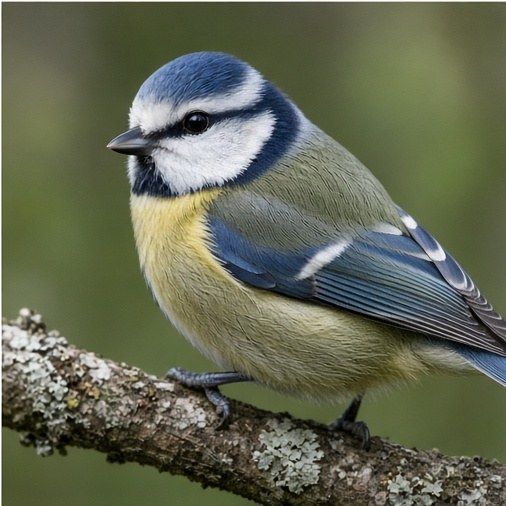
Start with size and shape
Experienced birders often name a bird from its outline alone. Compare the bird with three you already know well, such as a sparrow, a pigeon and a crow, and ask:
- Is the bill short and thick (seed-eater), thin and pointed (insect-eater), hooked (bird of prey) or long (wader)?
- Is the tail long or short, forked, notched or rounded?
- Are the legs long for wading or short for perching?
- Is the body plump or slim?
Then look for field marks
Field marks are the bold features that separate similar birds. Learn the names of the parts of a bird so your notes make sense later:
| Where | Look for |
|---|---|
| Head | Cap or crown colour, a stripe over the eye (supercilium), a line through the eye, a ring round the eye, cheek patches |
| Wings | Pale wing bars, coloured patches, how the wing tips sit against the tail |
| Body | Streaks or spots on the breast, a contrasting rump seen in flight |
| Tail | White outer feathers, bands, a spread or cocked posture |
Watch what it does
Behaviour narrows things down fast. Woodpeckers and treecreepers climb tree trunks; wagtails wag; thrushes run and stop on lawns; kingfishers and kestrels hover; herons stand and wait. Notice how it flies, too: bouncing, straight and fast, or soaring in circles.
Use habitat and season
A field guide shows a range map for each species. A bird that “should not” be in your area at this time of year usually is something else. Habitat helps too: a small brown bird in a reed bed is a different list from a small brown bird on a garden feeder.
Listen
In leafy places you will hear many more birds than you see. Learn songs one at a time, starting with the most common bird where you live. Describe each song in your own words. Sound-ID apps can make suggestions, but treat each one as a hint until you have seen the bird.
Take notes before you check the book
Write or sketch what you saw first, then look it up. If you open the guide too early, your memory starts to fit the picture. A quick sketch needs only two ovals for the head and body, plus lines for the bill, tail and legs, with arrows pointing to the marks.
Not sure? It is fine to record “unknown warbler” or “gull sp.” Honest uncertainty makes better records than a confident guess.
Try this. Pick one common bird near you and watch it for ten minutes. Write down its shape, three field marks, one behaviour and one sound, then check your notes against a field guide.