
Guide three
Backyard Birds
Birds need food, water, shelter and somewhere safe to nest. A garden, yard or even a balcony that offers some of these will soon have regular visitors.
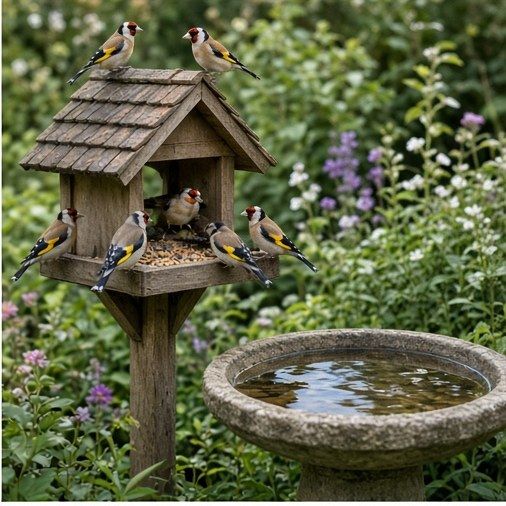
Food
| Food | Good for | Notes |
|---|---|---|
| Sunflower hearts | Finches, tits, sparrows | Less mess than seed in husks |
| Mixed seed | Many small birds | Avoid mixes padded with split peas or lentils |
| Nyjer seed | Goldfinches and siskins | Needs a special fine-port feeder |
| Fat balls or suet | Tits, starlings, woodpeckers | Remove any nylon mesh bags, which can trap feet |
| Apples and soft fruit | Thrushes and blackbirds | Put on the ground in winter |
Do not use salted peanuts, bread, cooking fat from roasting pans, or dried coconut. In the nesting season, offer peanuts only in a mesh feeder so adults cannot carry whole nuts to small chicks.
Keep feeders clean
Feeding stations can spread diseases such as trichomonosis, which hits finches hard. Clean feeders and tables every week or two with hot soapy water or a mild disinfectant, rinse and dry them, and move them around now and then. If you see sick birds, stop feeding for a couple of weeks.
Water
A shallow bath with sloping sides, no deeper than a few centimetres, is used for drinking and bathing all year. Change the water often, scrub it out regularly, and in frost float a small ball to stop it freezing over.
Shelter and planting
Place feeders about two metres from a bush or hedge: close enough for birds to dive into cover, far enough that cats cannot hide there. Native shrubs, berry bushes, a patch of long grass and a log pile all bring insects and seeds, which feed far more birds than any feeder.
Nest boxes
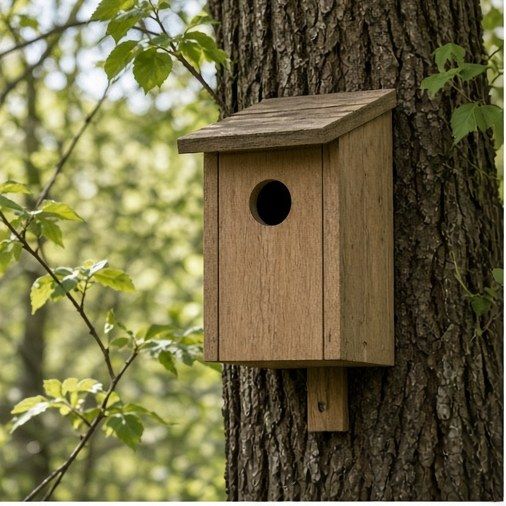
- Hole size decides who moves in. In Britain, for example, 25 mm suits blue tits, 28 mm great tits and 32 mm house sparrows. Check a local bird charity for the right sizes where you live.
- Position the box out of strong midday sun and the prevailing wind, on a wall or trunk two to four metres up, with a clear flight path.
- Leave it alone while birds are nesting. Clean old nests out only after the season ends, and only where the law allows.
Keeping birds safe
- Cats: put feeders where cats cannot ambush them, and keep pet cats in at dawn and dusk, the busiest feeding times.
- Windows: stickers, screens or external blinds break up reflections and reduce collisions.
- Chemicals: slug pellets and insecticides remove the food birds need.
Try this. Join a garden bird count, such as the RSPB Big Garden Birdwatch in the UK each January or the Great Backyard Bird Count each February: one hour of counting what visits, shared with researchers.